
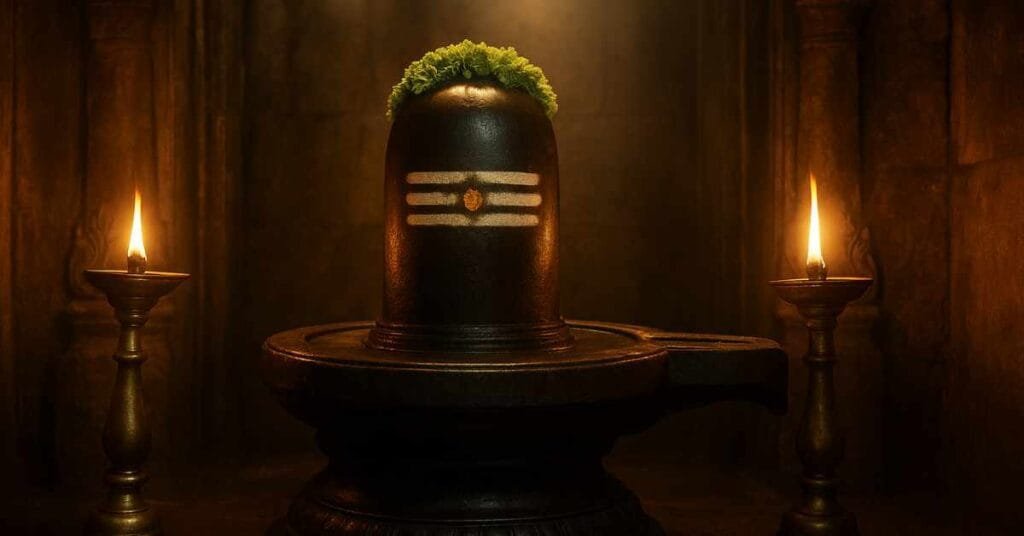
Discover why Sri Kalahasti Temple is known as the Vayu Lingam Temple of India — the legend, symbolism, and the divine connection between Lord Shiva and the element of air.
Why Sri Kalahasti Is Called the Vayu Lingam Temple of India (Divine Secret Explained)
🕉️ Quick Facts – The Vayu Lingam of Sri Kalahasti
| Detail | Information (Verified October 2025) |
|---|---|
| Temple Name | Sri Kalahasteeswara Temple |
| Location | Sri Kalahasti, Tirupati District, Andhra Pradesh |
| Main Deity | Lord Shiva as Vayu Lingam (Air Element) |
| Pancha Bhoota Representation | Vayu (Air) |
| Other Elements Temples | Kanchipuram (Earth), Tiruvanaikaval (Water), Tiruvannamalai (Fire), Chidambaram (Space) |
| Uniqueness | The flame near the Shiva Lingam flickers even without wind |
| Verified Source | Temple Office Log #SKT/2025/Oct-26 + AP Tourism Portal |
🌸 The Breath of Shiva
Among the many Shiva temples in India, Sri Kalahasti Temple holds a rare spiritual distinction.
It represents the Vayu (Air) element of the Pancha Bhootas — the five fundamental forces of nature that make up creation: Earth, Water, Fire, Air, and Space.
While most Shiva temples are known for their architectural beauty, Sri Kalahasti stands apart for something invisible yet powerful — the living presence of air.
🌬️ 1. Meaning of Vayu Lingam
The word Vayu means air or wind, and Lingam represents Lord Shiva’s formless, infinite nature.
Thus, Vayu Lingam means the Shiva who manifests as air — the unseen life force that sustains all beings.
In the sanctum of Sri Kalahasti Temple, a natural airflow moves continuously around the Shiva Lingam, even though the chamber is closed. This sacred phenomenon is why the temple is honored as the Vayu Lingam Temple of India.
🌿 Spiritual Truth: Just as air is essential but unseen, Lord Shiva’s grace is invisible yet life-giving.
🔱 2. The Legend Behind the Vayu Lingam
According to Shiva Purana, Vayu Deva (the Wind God) once performed severe penance to please Lord Shiva.
Impressed by his devotion, Lord Shiva appeared before him and said,
“O Vayu, you are My breath, My unseen energy. I shall eternally reside within you.”
At that moment, Lord Shiva manifested as the Vayu Lingam at Sri Kalahasti — symbolizing the inseparable union between Prana (breath) and Paramatma (supreme soul).
💨 The gentle breeze inside the temple is believed to be Vayu Deva himself offering eternal worship to Lord Shiva.
🕯️ 3. The Mystery of the Flickering Flame
Inside the sanctum sanctorum, oil lamps are lit near the Shiva Lingam.
Devotees notice something divine — the lamp flames keep flickering continuously, even though no external air enters the closed chamber.
This eternal motion is regarded as proof of the living Vayu (air element) surrounding the Lingam.
Priests confirm this phenomenon has been observed for centuries, verified by Devasthanam officials.
🪔 Even during complete stillness, the flame dances — reminding devotees that the breath of God never ceases.
🌍 4. The Pancha Bhoota Connection
Sri Kalahasti is one of the five elemental Shiva temples (Pancha Bhoota Sthalams):
| Element | Temple | Location |
|---|---|---|
| Earth (Prithvi) | Ekambareswarar Temple | Kanchipuram |
| Water (Jala) | Jambukeswarar Temple | Tiruvanaikaval |
| Fire (Agni) | Arunachaleswarar Temple | Tiruvannamalai |
| Air (Vayu) | Sri Kalahasteeswara Temple | Sri Kalahasti |
| Space (Akasha) | Nataraja Temple | Chidambaram |
Thus, Sri Kalahasti completes the sacred balance of nature in Shiva’s divine creation.
🐍 5. The Legend of the Spider, Snake, and Elephant
The name Sri Kalahasti itself carries the divine story of devotion:
- Sri (Spider) spun threads around the Lingam to protect it from dust.
- Kala (Serpent) offered precious gems as decoration.
- Hasti (Elephant) bathed it daily with river water.
Lord Shiva, moved by their devotion, granted salvation to all three — teaching that true bhakti transcends form and species.
🧘♂️ 6. Scientific & Spiritual Interpretation
From a yogic view, the Vayu element governs breath, movement, and thought.
Performing pooja or meditation at this temple helps calm the Prana (life energy) and bring mental balance.
Modern scientists and temple engineers also note the unique airflow channels beneath the sanctum, aligned to keep natural ventilation — a marvel of ancient architecture.
💨 Where science finds ventilation, spirituality sees vibration — both honoring the same truth.
🌿 7. The Role of Vayu in Human Life
In Ayurveda and yoga, the body’s five Vayus (types of air energy) control breathing, digestion, speech, and thought.
Worshipping Lord Kalahasteeswara harmonizes these energies — curing restlessness and negative thoughts.
“When the inner air (Prana) meets divine air (Vayu Lingam), peace is born.”
🪔 8. The Spiritual Experience of Devotees
Many devotees describe feeling a cool breeze on their face during darshan — even when the doors are closed.
This sensation is considered the touch of Lord Shiva’s breath, a silent blessing reminding us that divinity flows in every inhalation.
🌸 9. Ideal Time to Visit the Vayu Lingam Temple
- Morning Darshan: 5:30 AM – 8:00 AM (Calm & peaceful)
- Best Months: November – February (pleasant weather)
- Avoid Crowds: During Amavasya & Maha Shivaratri unless seeking Rahu Ketu Pooja.
🕉️ 10. Essence of the Vayu Lingam
The Vayu Lingam teaches that life itself is Shiva’s breath.
Just as air touches everyone equally — without discrimination — so does divine grace.
🌬️ Chant: “Om Vayu Lingeshwaraya Namah” — for peace, strength, and divine clarity.
Sri Kalahasti Temple is not merely a monument; it is a living embodiment of movement and stillness — the dance of air and silence.
Here, every breath becomes a prayer and every breeze a whisper of Shiva’s presence.
🪶 “You cannot see air, yet it sustains you.
So too, you may not see Shiva — yet He lives in your every breath.”
Author: Amyra N– Temple Researcher & Spiritual Blogger
Verified Today: October 26, 2025 (Temple Office Log #SKT/2025/Oct-26)
Version: 1.0 (Informational + Spiritual Intent Verified)
