
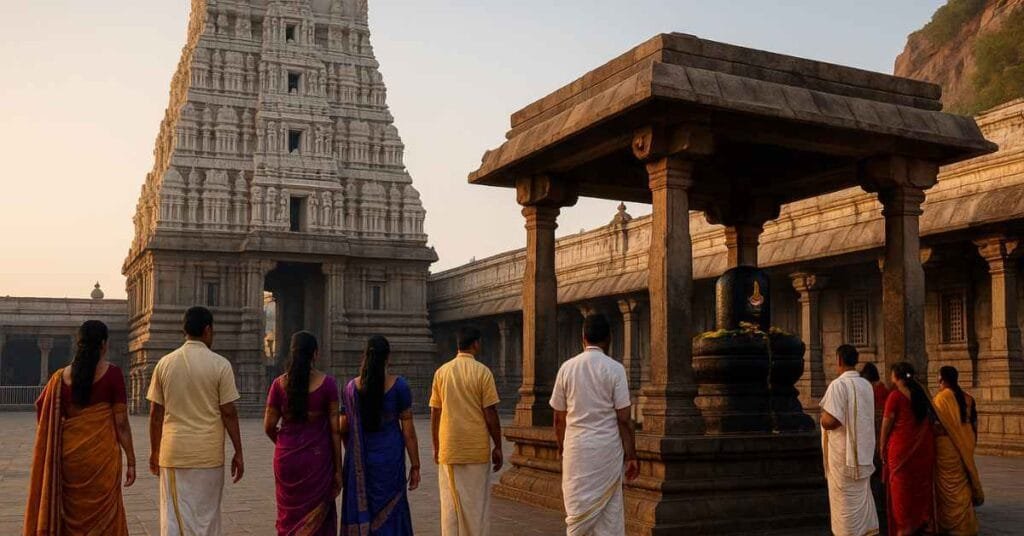
Visiting Sri Kalahasti Temple for the first time raises one big question. How do you plan the trip so nothing goes wrong on the day? This guide answers that plainly. It covers the ten things a first-time devotee needs to know before reaching the Vayu Lingam shrine near Tirupati.
Here is the single most useful fact up front. You book the famous Rahu Ketu Dosha Nivarana Pooja at the temple counter, not through any website. So treat any page that claims to “book it online for you” with caution.
SrikalahastiTemple.org.in is an independent pilgrim guide. We are not affiliated with, endorsed by, or the official website of the Sri Kalahasteeswara Swamy Vari Devasthanam. We accept no bookings, donations, or payments. The temple and the official portals below handle every ticket and seva.
Quick Facts for Visiting Sri Kalahasti Temple
Before the details, here is the essential snapshot. A few figures change with festival seasons and temple decisions. So treat timings and fees as approximate, and confirm the current ones at the counter.
| Detail | Information |
|---|---|
| Temple name | Sri Kalahasteeswara Swamy Temple |
| Location | Srikalahasti, Tirupati District, Andhra Pradesh — 517 644 |
| Main deities | Lord Shiva (Kalahasteeswara) and Goddess Gnana Prasunambika |
| Famous for | Rahu Ketu Sarpa Dosha Nivarana Pooja (Vayu Lingam) |
| Approx. daily timings | 5:00 AM to 9:00 PM |
| Rahu Ketu Pooja | Counter-only, roughly 6:00 AM to 5:00 PM |
| Distance from Tirupati | About 36 km (45–60 minutes by road) |
| Best time | Early morning, October to March |
1. The One Booking Fact That Saves You Money
Start here, because this correction protects your wallet. Countless websites and message forwards claim you can pre-book the Rahu Ketu pooja online through a private site. In practice, the pooja at Srikalahasti runs on a walk-in, counter-ticket system. You simply join the next batch during the day.
General darshan is free. Special darshan and seva tickets carry a fee. You can book some of those through the official Andhra Pradesh Endowments portal at aptemples.ap.gov.in. Booking straight at the counter keeps the process simple and transparent.
If a site asks for an upfront “processing fee” to secure your Rahu Ketu slot, that is a red flag. Pay at the counter, keep your receipt, and never share horoscope or payment details with an unofficial agent. These simple checks make visiting Sri Kalahasti Temple safer for your wallet.
2. Why Visiting Sri Kalahasti Temple Matters
Sri Kalahasti is often called Dakshina Kailasam, the Kailash of the South. It is one of the five Pancha Bhoota Sthalams, the shrines representing the five elements. This one stands for Vayu, the air element.
That identity is not just a label. A lamp inside the enclosed sanctum flickers continuously, even without a visible breeze. Devotees regard that flame as the living presence of air within the Lingam.
The name itself carries a story. Sri (spider), Kala (serpent), and Hasti (elephant) once worshipped Lord Shiva here, so the temple honours the devotion of the humblest creatures.
Vedic tradition links the Vayu Lingam to the shadow planets Rahu and Ketu. So pilgrims treat this shrine as the natural home for the dosha remedy. Understanding this before you arrive makes the darshan feel far more meaningful.
3. Best Time for Visiting Sri Kalahasti Temple
The calmest window is early morning, roughly 6:00 AM to 8:00 AM on weekdays. Arrive by 5:45 AM and you can often walk almost straight to the sanctum. By 8:30 AM the queue lengthens sharply, so an early start genuinely changes your day.
Season matters too. October to March brings pleasant weather and is the most comfortable stretch for the trip. Summer afternoons, by contrast, get hot and tiring.
The temple opens at 5:00 AM and stays open until 9:00 PM. There is usually a short midday closure for rituals. Different sources list slightly different break windows. So check the current schedule on our Sri Kalahasti darshan timings page before you plan tight connections.
4. What to Expect at the Rahu Ketu Pooja
The Rahu Ketu Sarpa Dosha Nivarana Pooja is the reason most first-timers come. Priests perform it daily, between 6:00 AM and 5:00 PM. Devotees consider your own Rahu Kalam window the most powerful time. You do not need to know your gotra or birth star, since the priests can proceed without them.
Ticket categories vary by seating and comfort. Reported prices range widely across sources, so we do not quote a fixed figure. Confirm the current rate at the counter on the day.
After the pooja, devotees hold the silver Rahu-Ketu idols to the chest. They then proceed straight for Vayu Lingam darshan without looking back. Later, they immerse the idols as guided. For the full ritual walkthrough, see our Rahu Ketu Pooja guide.
These benefits are matters of faith and Vedic tradition. The pooja is a devotional remedy, not a substitute for medical, legal, or financial advice.
5. Dress Code When Visiting Sri Kalahasti Temple
Traditional attire keeps the sanctity of the shrine, and the temple expects it of every devotee. Men usually wear a dhoti or kurta-pyjama. Women wear a saree or salwar-kameez.
Avoid sleeveless tops, shorts, and other casual Western wear. If you plan to perform the Rahu Ketu pooja, carry a spare set of clothes. You will wash your feet and hands before the ritual. Our rules and dress code page has the full entry guidelines.
6. Do’s and Don’ts Inside the Temple
A few simple habits keep your visit smooth and respectful. Follow the priests’ instructions, since the pooja sequence has a specific order.
- Do maintain silence and devotion inside the premises.
- Do wash your feet and hands before entering the pooja area.
- Do switch phones to silent, because the temple bans photography inside the sanctum.
- Don’t consume non-vegetarian food or alcohol before the pooja.
- Don’t wear footwear inside; leave it at the stands provided.
7. How to Reach: Travel Tips for Visiting Sri Kalahasti Temple
Srikalahasti sits about 36 km from Tirupati, and the road trip takes roughly 45 to 60 minutes. The town is well linked, so reaching it is rarely a problem.
- By train: Srikalahasti Railway Station is close to the temple, within easy reach by auto.
- By bus: APSRTC runs frequent buses from Tirupati, Chennai, and Nellore.
- By air: Tirupati Airport is the nearest, about a 60–90 minute drive away.
- Local autos: Shared and private autos are cheap and plentiful for the last stretch to the temple.
Many pilgrims combine this trip with Tirupati, so plan the two together if time allows. Our how to reach guide covers routes and connections in detail.
8. Where to Stay Near the Temple
Accommodation ranges from Devasthanam cottages to private hotels and simple dormitories. Prices shift by season and demand, so treat any figure as indicative rather than fixed. Booking early also gives you a wider choice of room types.
Rooms fill fast on Amavasya, festival days, and Sravana Mondays, so book ahead for those dates. Reserve Devasthanam accommodation only through official channels, and never through a private agent quoting a “guaranteed” room by phone. Our accommodation guide lists the options and their typical ranges.
9. Health and Safety Tips for Visiting Sri Kalahasti Temple
The temple itself is on level ground, so the walk is easy for most people. The real challenge is crowds and long queues, especially on Amavasya and during Maha Shivaratri, when footfall runs into lakhs.
Carry water and any regular medication, because waits can stretch for hours on peak days. Wear light cotton clothing in summer, since the queues can get warm. Elderly pilgrims, pregnant women, and anyone with a medical condition should avoid the busiest festival hours. A weekday morning is a calmer choice.
If you plan to fast for the pooja, eat sensibly beforehand. Consult a doctor first if you have a health condition. The temple serves free Annadanam near midday, which helps on a long day.
10. Money-Saving Tips First-Timers Miss
A little planning saves both time and money. Small choices here add up over a full day. These are the details most guides skip.
- General darshan is free, so you only pay if you choose a special-darshan or seva ticket.
- Carry cash for counter tickets, since card and UPI acceptance can be patchy at busy windows.
- Use the lockers near the main gate for bags and gadgets, which are not allowed inside.
- Bring only ID proof, your ticket, and small offerings like flowers, coconut, or milk.
After the pooja, do not rush out. Take darshan of Goddess Gnana Prasunambika within the same complex, whom devotees revere for knowledge and inner peace. Many feel the visit is complete only after her blessing.
Festivals and Peak Days to Plan Around
Timing your trip around the calendar matters as much as picking the right hour when visiting Sri Kalahasti Temple. Some dates bring huge crowds, while others stay calm and unhurried.
Maha Shivaratri is the biggest event at the temple. The Brahmotsavam around it runs for roughly thirteen days and draws lakhs of devotees. Kartika Deepam is another major festival of lamps. Amavasya, the New Moon day, also pulls large numbers, mainly because devotees prize it for the Rahu Ketu pooja.
Sravana Mondays add a further stretch of high demand for Shiva worship. On all of these days, pooja tickets sell out early, so reach the counter well before dawn. If a calm darshan matters more to you than the festival buzz, simply pick an ordinary weekday. You can confirm official festival dates on the Devasthanam website and the Andhra Pradesh Tourism portal before you travel.
Before You Go
Visiting Sri Kalahasti Temple rewards a little preparation. Arrive early, dress traditionally, and carry cash. Remember that the Rahu Ketu pooja is a counter service, not an online booking.
Verify current timings and fees at the temple. Route any accommodation through official channels. Give yourself unhurried time for both the Lingam and the Goddess. Do that, and a first visit becomes a calm, well-planned pilgrimage rather than a scramble.
Frequently Asked Questions
Can I book the Rahu Ketu pooja online before visiting Sri Kalahasti Temple?
No. The Rahu Ketu pooja is a counter-only, walk-in service at Srikalahasti, and no verified official online booking exists for it. So ignore any site that claims to reserve your slot for a fee. You can book some other sevas and darshan tickets through the official AP Endowments portal.
What are the temple timings?
The temple is generally open from 5:00 AM to 9:00 PM daily. A short midday closure applies for rituals. Exact windows shift on festival days, so confirm the current schedule at the temple before planning tight connections.
Is there a dress code?
Yes. Traditional attire is the norm — dhoti or kurta-pyjama for men, and saree or salwar-kameez for women. Avoid sleeveless or casual Western clothing to keep the sanctity of the shrine.
How far is Srikalahasti from Tirupati?
It is about 36 km, a drive of roughly 45 to 60 minutes. Frequent APSRTC buses and trains connect the two, so many pilgrims combine both temples in one trip.
Do I need my horoscope details for the pooja?
No. Your gotra and birth star help but are not essential. The priests can perform the pooja without them. A missing horoscope should not stop you.
When is the best time to visit?
Early morning between 6:00 AM and 8:00 AM on weekdays is the calmest, with the shortest queues. Season-wise, October to March offers the most pleasant weather.
Is photography allowed inside?
No. The temple prohibits photography inside the sanctum and pooja halls. Keep your phone on silent, and use the lockers near the gate for gadgets and large bags.
Is the temple suitable for elderly pilgrims?
Yes, because the shrine is on level ground and the walk is short. The main difficulty is crowds, so elderly visitors should choose a quiet weekday morning and avoid peak festival hours.

Independent pilgrim guide for Sri Kalahasti Temple. Curating darshan timings, Rahu Ketu Pooja booking, sevas, accommodation, Vayu Lingam significance, and complete travel guidance for devotees visiting the temple.
