
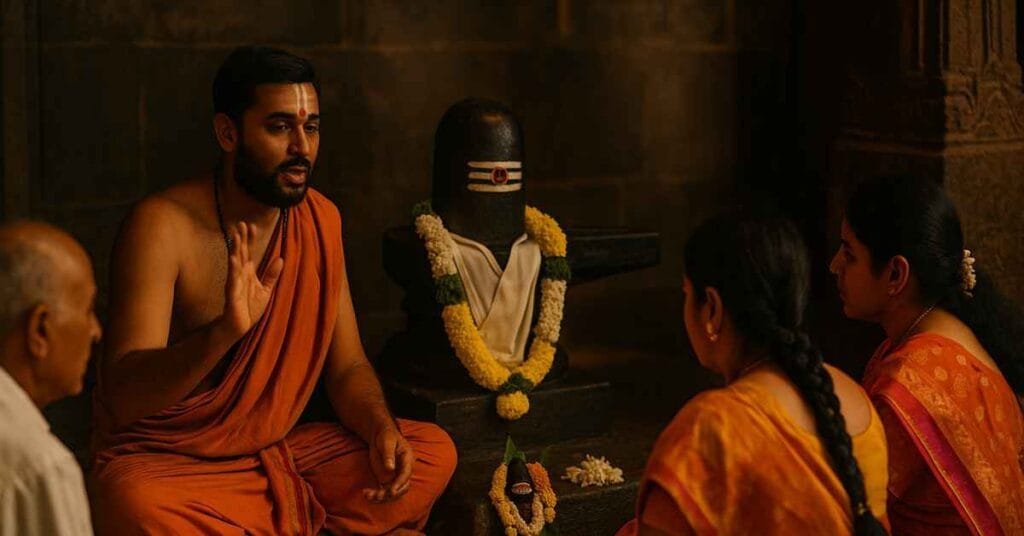
To perform Rahu Ketu Pooja at Sri Kalahasti Temple, you buy a ticket at the temple seva counter, collect your pooja kit, and sit through a guided 30 to 45 minute ritual led by a priest. There is no complicated online form to chase and no agent you need to pay. Because most guides get the booking part wrong, this walkthrough sticks to what actually happens on the ground, so you arrive knowing exactly what to do.
SrikalahastiTemple.org.in is an independent pilgrim guide. We are not the official temple, not the Devasthanam, and not affiliated with it. We do not take bookings, collect fees, or issue tickets. Book only through the official Sri Kalahasteeswara Swamy Vari Devasthanam or the temple counters, both linked below.
Rahu Ketu Pooja at a glance
Here are the core facts, so you can plan before the details. Treat prices and slots as indicative, since the temple can revise them and demand shifts by the day.
| Detail | What to expect |
|---|---|
| Full name | Rahu Ketu Dosha Nivarana Pooja (Kalasarpa Dosha Nivarana) |
| Where | Rahu Ketu mandapam inside Sri Kalahasteeswara Temple, Srikalahasti |
| Daily timing | Around 6:00 AM to 5:00 PM, in continuous batches |
| Duration | Roughly 30 to 45 minutes per batch |
| Booking | Counter ticket, same day; online is limited for this pooja |
| Ticket range | Several categories, commonly about ₹500 to ₹5,000 (confirm at the counter) |
| Chanting | Sanskrit and Telugu, led by the priest |
| Dress code | Traditional attire; avoid casual or black clothing |
Why Srikalahasti is the place for this ritual
Rahu and Ketu are the two shadow planets in Vedic astrology. When they sit poorly in a birth chart, tradition links them to delays in marriage, career setbacks, and Kalasarpa Dosha, where every planet falls between them. Devotees come here because Sri Kalahasti is treated as a Rahu Ketu kshetra, one of the few temples that performs this remedy with full ritual weight.
The temple is also a Pancha Bhoota Sthalam representing Vayu, the air element. Unusually, the ritual continues even on Amavasya and during solar and lunar eclipses, when most temples close their doors. That reputation, not any guarantee of results, is why pilgrims travel from across India to perform Rahu Ketu Pooja here.
Is the pooja a cure for real-life problems?
No honest guide can promise that. The pooja is a matter of faith and Vedic tradition, so treat it as spiritual practice rather than a fix for medical, legal, or financial trouble. If you face a serious health or money decision, consult a qualified professional as well, because faith and expert advice work best together.
How to book: counter ticket, not an online scramble
This is where competing pages mislead readers, so read carefully. To perform Rahu Ketu Pooja, you do not need an agent or a paid web slot. Tickets are issued mainly at the temple seva counters on the same day. Online booking for this specific pooja is inconsistent, and many devotees who wait for a web slot simply do not find one.
Because of that, do not trust any private site or number that claims to “book your Rahu Ketu Pooja online” for a fee. Genuine tickets come from the counter, from the official Devasthanam site, or the Andhra Pradesh Endowments portal. If a page asks for an upfront processing fee to a private account, treat it as a scam and walk away.
For a fuller walkthrough of the official channels, see our Sri Kalahasti online booking guide and the sibling page on Rahu Ketu Pooja timings and tickets. Both point you to the same official portals.
What to carry before you perform Rahu Ketu Pooja
Preparation matters as much as the ritual itself. A little planning keeps the morning calm, since the mandapam gets busy fast.
- A valid photo ID, because the counter may ask for it.
- Your gothra and family details, if you know them; the priest will ask.
- Traditional clothes: dhoti for men, saree or salwar for women.
- Cash or a UPI-ready phone for the ticket, since card use can be patchy.
- A water bottle and any regular medication, especially for elderly pilgrims.
Most devotees also take a head bath that morning and avoid non-vegetarian food and alcohol the day before. These are customs of purity, not strict rules, so follow them to the extent your health allows.
How to perform Rahu Ketu Pooja: the step-by-step ritual
Once you reach the mandapam, the flow is simple and the priests guide every stage. To perform Rahu Ketu Pooja, you just follow the sequence below, so nothing catches you off guard.
- Buy your ticket. Choose a category at the seva counter and keep the receipt safe, because you show it at the mandapam entrance.
- Collect the pooja kit. You receive small silver Rahu and Ketu idols, flowers, betel leaves, milk, and camphor.
- Wash and settle. Rinse your hands and feet at the taps nearby, then take your seat as the priest directs.
- Sankalpam. State your name, gothra, and intention when prompted, since this frames the whole ritual.
- Chant with the priest. Follow the Rahu and Ketu mantras and “Om Namah Shivaya” as guided; do not worry about counting, because the priest keeps the rhythm.
- Offer flowers and milk. Place the flowers and betel leaves, then pour milk over the idols as a gesture of surrender.
- Pradakshina. Circle the idols a few times, the small circular walk that closes most Shiva rituals.
- Receive the aarti. The priest waves the camphor flame and gives you vibhuti, the sacred ash.
- Take the idols home. Carry the silver Rahu and Ketu idols to your home shrine and keep worshipping them, ideally on Amavasya.
The exact mantra count and small offerings vary between priests and ticket categories, so let the priest lead rather than following a fixed script from any website.
Best days to perform Rahu Ketu Pooja
You can perform Rahu Ketu Pooja on any day, since batches run right through the working hours. That said, tradition marks certain days as more auspicious, and the mandapam fills up on them.
| Day or window | Why devotees prefer it |
|---|---|
| Sundays and Tuesdays | Traditionally linked to Shiva and planetary remedies |
| Amavasya (new moon) | Considered especially potent for shadow-planet poojas |
| Rahu Kalam slots | Believed strongest for Rahu Ketu remedies; the window shifts daily |
| Eclipse days | Rare here, because the temple stays open during eclipses |
Rahu Kalam changes with sunrise and sunset, so check a reliable panchang for that day rather than trusting a fixed chart. On Amavasya and long weekends, arrive well before 8:00 AM, since slots for the popular windows can run out by midday.
Ticket categories and cost
The temple offers several ticket tiers, and every category earns the same ritual and blessing. Higher tiers mainly buy calmer seating closer to the mandapam, not a “better” pooja.
Reported categories commonly range from about ₹500 up to ₹5,000, and some sources list lower batch tickets too. Because these figures change and vary by season, confirm the current rate at the counter or the official portal before you rely on any number. Anyone quoting one fixed “official price” online is guessing.
What most guides get wrong
Three myths circulate about this pooja, and clearing them saves you money and stress. First, the online-booking myth: for Rahu Ketu Pooja, the counter is the real channel, whatever aggregator sites imply. Second, the fixed-price myth: there is a spread of categories, not one rate. Third, the “avoid full moon” claim is overstated, since tradition simply favours Amavasya and Rahu Kalam rather than banning other days.
Knowing this, you can ignore touts near the gate who promise a shortcut. Ask to be dropped at the south gopuram side, use the temple’s own counters, and you sidestep the common scams that target first-time pilgrims.
Combining the pooja with a Tirupati trip
Srikalahasti sits about 36 km from Tirupati, roughly a 50 minute drive, so many pilgrims pair the two. A common plan is a morning Tirumala darshan, then a drive here to perform Rahu Ketu Pooja by early afternoon. You can head back the same evening without rushing.
If you drive from the Nellore side, Srikalahasti often comes before Tirupati, which makes it an easy first stop. For routes and transport, our how to reach Sri Kalahasti guide covers bus, train, and cab options in detail.
After the pooja: what to do next
Once your batch finishes, the visit is not quite over. A few simple steps round off the ritual with the right spirit.
Visit the main sanctum of Lord Kalahasteeswara and Goddess Gnana Prasunambika Devi for darshan. Many devotees offer a coconut, sit quietly for a few minutes, and leave in silence. Keep the silver idols at your home shrine afterwards, rather than in a wallet or vehicle, and worship them on Amavasya to continue the practice.
A quick health note before you go
The ritual is gentle, yet the day can be long and warm. If you are elderly, pregnant, diabetic, or fast before the pooja, eat something light, carry water and medicines, and pace yourself through the queue. Faith and common-sense care belong together, so never skip needed medication for the sake of a fast.
Before you go: the short version
To perform Rahu Ketu Pooja at Srikalahasti is easier than the internet makes it sound. Reach early, buy your ticket at the counter, dress traditionally, and let the priest guide the ritual. Book only through the official Devasthanam or the temple counters. Keep your expectations rooted in faith rather than guarantees, and you will have a calm visit to Lord Shiva’s Vayu Lingam shrine.
Frequently asked questions
Can I perform Rahu Ketu Pooja without a priest?
No, the temple guides this pooja through its priests, who lead the chanting and offerings. Self-performance inside the mandapam is not the norm, so join a batch and follow the priest. You can, however, continue worshipping the silver idols at home yourself.
Do I need to book Rahu Ketu Pooja online in advance?
Usually not. Tickets are mainly issued at the temple counters on the same day, and online booking for this pooja is limited. Prior booking helps only for very high-demand days like Amavasya, and even then the counter is the reliable route.
How much does the pooja cost?
There are several ticket categories, commonly from around ₹500 up to ₹5,000, with some lower batch options reported. Every tier receives the same ritual. Always confirm the current rate at the counter, since prices change over time.
How long does the ritual take?
Each batch runs about 30 to 45 minutes, though busy days can add waiting time before your slot. Arriving early keeps the whole visit smoother. Factor in extra time if you also want main-sanctum darshan afterwards.
Can women perform the pooja?
Yes, women perform this pooja freely, alone or as a couple. The only customary exception is during menstrual days, in line with temple tradition. Traditional dress is expected, as with all sevas here.
Which days are best for the pooja?
Sundays, Tuesdays, Amavasya, and Rahu Kalam windows are traditionally favoured. Eclipse days are considered especially powerful, since Srikalahasti stays open when other temples close. Any regular day still works well if those do not suit your travel.
What do I do with the silver idols afterwards?
Keep them in your home pooja room, not in a wallet or vehicle. Worship them with simple offerings, ideally on Amavasya, to continue the remedy at home. They are meant as a lasting link to the pooja you performed.
Is the pooja available during eclipses?
Yes, and that is part of what makes Srikalahasti special. While most temples shut during a solar or lunar eclipse, this shrine continues the Rahu Ketu ritual. Many devotees deliberately plan their visit around these dates.
Official sources
Verify current timings, ticket rates, and booking rules directly with the temple through these official channels: the Sri Kalahasteeswara Swamy Vari Devasthanam website, the Andhra Pradesh Endowments temples portal, and the Government of India’s Incredible India temple page. For booking queries, the Devasthanam lists an Endowments Information Centre helpline on its official contact page.

Independent pilgrim guide for Sri Kalahasti Temple. Curating darshan timings, Rahu Ketu Pooja booking, sevas, accommodation, Vayu Lingam significance, and complete travel guidance for devotees visiting the temple.
