
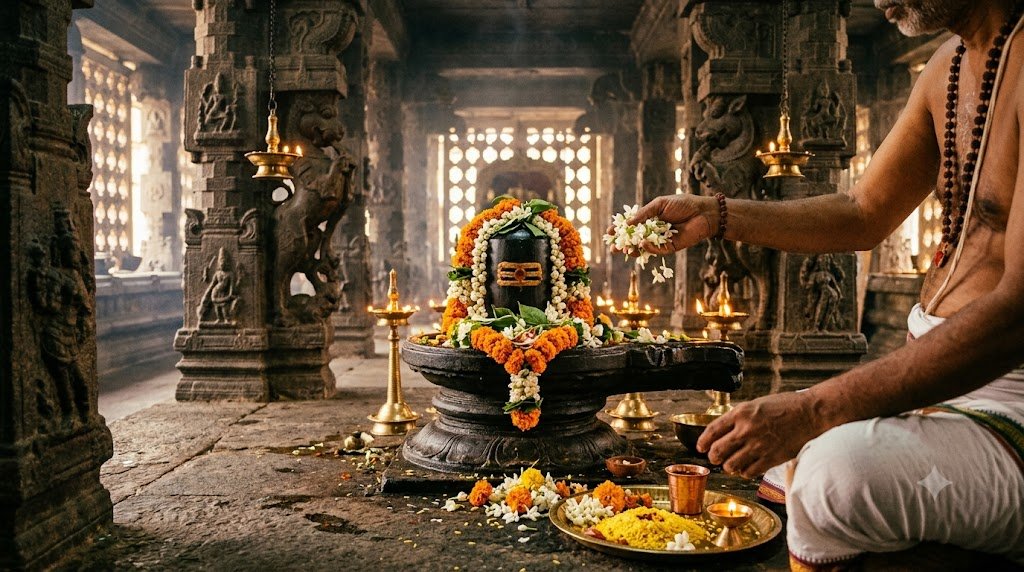
Srikalahasti Ashtottara Archana is one of the temple’s simplest and most affordable rituals, yet most pilgrims arrive unsure what it actually involves. It is a short archana in which a priest chants 108 sacred names of the deity while offering flowers or turmeric rice on your behalf. Many people confuse it with the famous Rahu Ketu Pooja or with the longer thousand-name archana, so they either overpay or miss the seva entirely. This guide explains the ritual, its likely cost, timings, and the correct way to book, so you walk in knowing exactly what to ask for.
srikalahastitemple.org.in is an independent pilgrim guide. It is not affiliated with, endorsed by, or the official website of the Sri Kalahastheeswara Swamy Vari Devasthanam. We take no bookings, donations, or payments. All seva tickets are issued only at the temple counters or through the official Devasthanam portal linked below.
Srikalahasti Ashtottara Archana at a Glance
- What it is: a 108-name archana (Ashtottara Shatanamavali) performed by a temple priest.
- Deity: Lord Sri Kalahasteeswara (the Vayu Lingam) and Goddess Gnana Prasunambika Devi.
- Likely cost: a nominal seva ticket, typically in the low hundreds of rupees. Confirm the current amount at the counter or on the official portal.
- Where to book: temple seva counter on the day, or the official AP Endowments portal.
- Duration: roughly 10 to 20 minutes for the archana itself.
- What to carry: your name and gotra help the priest personalise the Sankalpam.
What Is Srikalahasti Ashtottara Archana?
Srikalahasti Ashtottara Archana is a devotional ritual where a priest recites 108 names of the Lord, offering a flower or a pinch of akshata at each name. “Ashtottara Shatanamavali” literally means the garland of one hundred and eight names. Because it is short and inexpensive, it is one of the most accessible sevas at the temple.
The ritual begins with a Sankalpam, where the priest takes your name and gotra to dedicate the archana to you. Then the 108 names flow one after another, each ending in “namaha”. After the chant, you receive kumkum, vibhuti, or a small prasadam as a blessing. The whole seva stays personal, even though the temple sees heavy crowds.
Ashtottara, Sahasranama, and Trisati: Know the Difference
Devotees often mix up the three archana types, so they pick the wrong ticket at the counter. The number in each name tells you how many divine names the priest chants. More names mean a longer ritual and usually a higher fee, though every one of them is a valid way to seek blessings.
| Archana Type | Names Chanted | Roughly |
|---|---|---|
| Ashtottara Archana | 108 names | Short, everyday seva |
| Trisati Archana | 300 names | Medium length |
| Sahasranama Archana | 1,000 names | Longer, more elaborate |
If you want a quick, meaningful offering without a long wait, the 108-name archana is the natural choice. Since the Sahasranama version runs to a thousand names, it takes far longer and suits devotees who want a fuller ritual. You can also perform more than one over a single visit.
Srikalahasti Ashtottara Archana Cost and Ticket Details
Srikalahasti Ashtottara Archana carries a small seva fee, usually in the low hundreds of rupees per ticket. The temple has not published a fixed online figure for this specific archana, so treat any number you see on third-party sites as indicative only. Always confirm the live amount at the counter or on the official portal before you pay.
Some aggregator pages quote a flat rate as if it never changes. That is misleading, because the Devasthanam revises seva fees from time to time. When a fee matters to your budget, check it on the day rather than trusting an old blog figure. The pooja materials are normally supplied by the temple, so you rarely need to buy anything extra outside.
Srikalahasti Ashtottara Archana Timings and Best Days
The temple generally opens around 5:00 AM and closes by about 9:00 PM, though timings shift on festival days. Archanas are usually performed through the day, after the morning abhishekam and alankaram are complete. Reach the counter with time to spare, since queues build up quickly on weekends.
Mondays carry special weight here because the temple is a Shiva kshetra. The Sravana month, Maha Shivaratri, and Pradosham days draw the biggest crowds. For an unhurried archana, pick a weekday between October and February, when the weather is cooler and lines move faster.
How to Book Srikalahasti Ashtottara Archana
You can book Srikalahasti Ashtottara Archana at the temple seva counter on the day of your visit. Buy the archana ticket, note your allotted slot or queue, and hand your name and gotra to the priest at the mandapam. Counter tickets are valid only for the same day, so plan your arrival accordingly.
Can You Book Ashtottara Archana Online?
Online availability for small daily archanas is limited, and it changes with temple policy. The official AP Endowments portal at aptemples.ap.gov.in lists sevas and darshan tickets for the Devasthanam, while the temple’s own portal at aptemples.ap.gov.in handles official services. If the archana is not bookable online, buy it at the counter instead. Never pay a private agent or a “book here” number claiming to be the temple.
What Happens During the Ritual
After you hand over your ticket, the priest starts with a short Sankalpam in your name and gotra. He then chants the 108 names, offering flowers or turmeric rice at the deity’s feet. You stand or sit close by with folded hands while the names are recited.
Once the chant ends, the priest performs a brief harati and gives you prasadam. Because the ritual is personal, you can carry a specific prayer or intention in your heart. Keep your phone away, since photography is restricted near the sanctum.
Which Deity Receives the Archana
At Srikalahasti, the archana is most often offered to Lord Sri Kalahasteeswara, the self-manifested Vayu Lingam that represents the air element among the Pancha Bhoota Sthalams. Many devotees also request the archana for Goddess Gnana Prasunambika Devi, the temple’s presiding mother. You can specify which shrine you want when you buy the ticket.
The temple sits on the banks of the Swarnamukhi River near Tirupati. Its towering gopuram and centuries-old carved corridors were expanded by the Chola and Vijayanagara rulers. This deep heritage is part of why devotees value even a short archana performed here.
Why the 108-Name Archana Matters
The number 108 runs deep through Hindu tradition, so the Ashtottara carries weight far beyond its short length. Devotees link it to the 108 beads of a japa mala and to the count used in many temple chants. Each name in the Srikalahasti Ashtottara Archana praises a different quality of the Lord, from his compassion to his cosmic power.
Reciting these names is believed to focus the mind and invite grace, which is why the seva stays popular despite grander rituals nearby. Because it is quick, a working pilgrim can offer it and still catch a train the same evening. Families often perform it on birthdays, anniversaries, or a child’s naming, since it fits neatly into a busy visit.
Combining the Archana With Darshan
Most pilgrims pair the Srikalahasti Ashtottara Archana with a regular or special darshan of the main shrine. After the archana, you can join the darshan queue and view the Vayu Lingam up close. Planning both in one visit saves you a second trip.
If your day allows, add the underground Pathala Ganapathi shrine within the complex, which many visitors miss. The Swarnamukhi River ghat nearby is a calm spot to sit after the ritual. When you have more time, the temple’s other sevas, listed at the counter, are worth exploring too.
How to Reach Srikalahasti
Srikalahasti lies about 36 km from Tirupati, so many pilgrims combine both temples in one trip. The Srikalahasti railway station sits roughly 2 km from the temple, and autos are easy to find. Tirupati International Airport is around 25 to 30 km away.
Regular buses run from Tirupati and nearby towns throughout the day. If you drive, the road from Tirupati takes under an hour in normal traffic. The temple also runs a free shuttle bus between the temple, the railway station, and the bus stand.
What First-Time Pilgrims Often Get Wrong
Many visitors assume every ritual at Srikalahasti is the Rahu Ketu Pooja. In truth, the Ashtottara Archana is a separate, simpler seva that you can perform on any ordinary day. You do not need a dosha or a special reason to offer it.
Another common mistake is buying pooja materials from stalls outside the temple. The Devasthanam usually provides everything the priest needs, so you can skip those purchases. A third trap is trusting fake “official booking” websites, since only the government portals and the temple counter are genuine.
- Wear traditional dress: a dhoti for men, a saree or salwar for women.
- Carry your name and gotra written down, because it speeds up the Sankalpam.
- Reach early on Mondays and festival days, when crowds swell sharply.
- Keep your ticket receipt until the archana is done.
A Note on Faith and Well-Being
The archana is a devotional practice rooted in Vedic tradition, and its benefits are matters of faith rather than guaranteed outcomes. It is not a substitute for medical treatment or professional advice, so treat any planetary or health-related hopes as spiritual comfort, not a cure. Approach the ritual with devotion, and let its calm settle your mind.
The temple can get hot and crowded during peak hours. If you are elderly, pregnant, or unwell, carry water and take breaks while waiting in line. Ask a temple volunteer for help if the queue feels too long to manage.
Before You Go
Srikalahasti Ashtottara Archana is an easy, affordable way to seek the Lord’s blessings without a long ritual or a heavy fee. Confirm the current cost at the counter, carry your gotra, and pick a quiet weekday if you can. For the fuller picture, see our Srikalahasti Temple all-seva list and the sister ritual, Kumkumarchana. When you want to plan tickets ahead, our online booking guide walks you through the official process step by step.
Frequently Asked Questions
What is Srikalahasti Ashtottara Archana?
It is a short devotional ritual where a priest chants 108 sacred names of the Lord and offers flowers or akshata on your behalf. The seva is personal, quick, and among the most affordable at the temple. You receive prasadam at the end.
How much does the Ashtottara Archana cost?
It carries a nominal seva fee, usually in the low hundreds of rupees per ticket. The temple has not published a fixed online figure, so confirm the live amount at the counter or on the official portal. Fees can change with temple policy.
Can I book the archana online?
Online booking for small daily archanas is limited and depends on current temple policy. Check the official AP Endowments portal, and if it is not listed there, buy the ticket at the temple counter. Avoid private agents claiming to book it for you.
Do I need to carry my gotra?
Your name and gotra help the priest dedicate the Sankalpam to you, so it is good to have them ready. If you do not know your gotra, the archana can still proceed. Many families simply write it on a slip beforehand.
Which deity is the archana offered to?
It is usually offered to Lord Sri Kalahasteeswara, the Vayu Lingam, or to Goddess Gnana Prasunambika Devi. You can tell the counter which shrine you prefer. Both are central deities of the temple.
Is Ashtottara Archana the same as Rahu Ketu Pooja?
No, they are entirely different sevas. The Rahu Ketu Pooja is a longer dosha-remedy ritual, while the Ashtottara Archana is a simple 108-name offering. You can perform the archana on any regular day without a special reason.
What is the best day to perform it?
Mondays and Pradosham days are especially auspicious at this Shiva temple. For lighter crowds, choose a weekday between October and February. Reach early to avoid long queues.
Are pooja materials provided?
Yes, the temple usually supplies the flowers and materials the priest needs. You rarely have to buy anything from outside stalls. Keep your ticket receipt handy until the seva is complete.

Independent pilgrim guide for Sri Kalahasti Temple. Curating darshan timings, Rahu Ketu Pooja booking, sevas, accommodation, Vayu Lingam significance, and complete travel guidance for devotees visiting the temple.
