
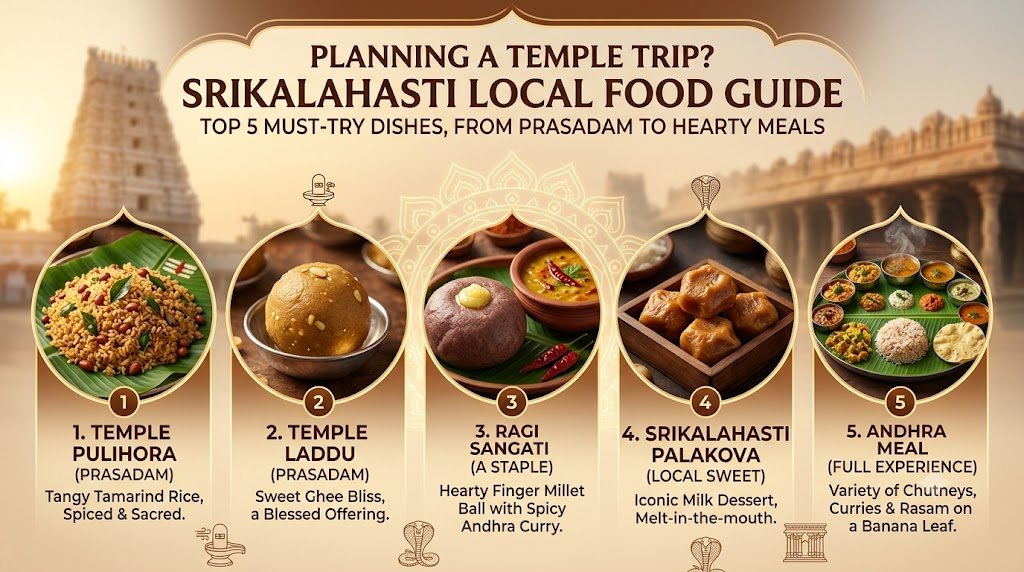
Planning a temple trip? This Srikalahasti local food guide covers the top 5 must-try dishes, from temple prasadam pulihora and laddu to hearty ragi sangati.
Srikalahasti local food turns a quick darshan into a memory you carry home. Most pilgrims rush in for the Rahu-Ketu pooja, then leave without tasting a thing. That is a genuine miss. This temple town sits on the banks of the Swarnamukhi river. It serves some of the most soulful vegetarian cooking in all of Rayalaseema. Below are the five dishes worth planning your meals around.
Key Takeaways
- It is a vegetarian temple town. Expect sattvic, spice-forward South Indian cooking inside the main bazaar.
- Temple prasadam is cheap and authentic. Laddu and pulihora cost just ₹10 each at the counters.
- Rayalaseema flavours rule. Ragi sangati, tamarind, peanut and red chillies define the regional taste.
- Free annadanam runs daily. The temple feeds thousands a sattvic meal at no cost.
- Non-veg is available outside town. Village dhabas on the highway serve natu kodi pulusu.
Why Srikalahasti Local Food Tastes Different
Notably, this is a temple town first and a food destination second. Vegetarian cooking dominates the streets around the Srikalahasteeswara shrine. The temple is one of the Pancha Bhoota Stalam, worshipped as the Vayu (air) linga. Many call it the “Kailash of the South.”
Moreover, the kitchen tradition here borrows heavily from Rayalaseema. Cooks lean on tamarind, groundnut, dry red chillies and finger millet. The result is bold, earthy and slightly fiery. You will rarely find bland food in this part of Andhra Pradesh.
Of course, the river adds its own character. Swarnamukhi water and local produce shape the flavour of everyday Srikalahasti local food. Furthermore, the constant flow of pilgrims keeps the small mess hotels busy and the turnover fresh.
The Top 5 Srikalahasti Local Food Dishes to Try
Specifically, these five picks balance temple prasadam, street snacks and a proper Rayalaseema meal. Each one tells you something about the town. Try all five across a single day trip if you can.
1. Pulihora (Tamarind Rice)
First, pulihora is the soul of any Srikalahasti food experience. This tangy tamarind rice is tempered with mustard, curry leaves, peanuts and dry chillies. The temple sells it as prasadam for just ₹10. Vendors near Sannidhi Street also pack it fresh.
In fact, pilgrims treat pulihora as both a snack and a blessing. The flavour is sharp, sour and faintly nutty. Naturally, it travels well, so many buy extra to eat on the bus home.
2. Srikalahasti Temple Laddu
Next comes the famous temple laddu. This boondi-and-ghee sweet is the most loved prasadam at the shrine. A regular laddu costs ₹10. The larger Mahanivedana laddu sells for around ₹50.
However, the laddu here is its own thing, distinct from the Tirumala version. It is softer, grainier and richer in ghee. Therefore, buy it warm and eat it the same day for the best taste.
3. Ragi Sangati (Finger Millet Balls)
Above all, no plate of Srikalahasti local food feels complete without ragi sangati. These soft finger-millet balls are a Rayalaseema staple. Locals eat them with pappu, tangy greens or peanut chutney. The dish is filling, cheap and deeply nutritious.
Interestingly, ragi sangati shares roots with Karnataka’s ragi mudde. Farmers across the dry belt have eaten it for generations. As a result, you will find it at village messes and a few traditional eateries on the town’s edge.
4. Punugulu and Mirchi Bajji
Meanwhile, the evening street scene belongs to fried snacks. Punugulu are crisp dosa-batter fritters served hot with coconut or tomato chutney. Mirchi bajji, a chilli fritter dipped in gram-flour batter, is the other favourite. Both sell from carts outside the temple entrance.
Clearly, these snacks shine at dusk after darshan. They cost very little, often ₹20 to ₹40 a plate. Besides, the smoky aroma alone pulls tired pilgrims toward the stalls.
5. Andhra Vegetarian Thali
Finally, sit down for a full Andhra meal. A typical thali brings rice, sambar, rasam, two curries, pappu, pickle, curd and a sweet. Most mess hotels charge ₹100 to ₹200 for one person. The spice level runs hot by default.
That said, ask for less chilli if you are sensitive. Restaurants near the bus stand and Sannidhi Street serve unlimited rice refills. Consequently, one thali easily powers a long pilgrimage day.
Srikalahasti Food at a Glance
Here is a quick comparison of the five dishes, their type and where to find them. Prices are indicative and may change, so confirm at the counter.
| Dish | Type | Where to Find | Approx. Cost |
|---|---|---|---|
| Pulihora | Tamarind rice / prasadam | Temple counter, Sannidhi St | ₹10 |
| Temple Laddu | Sweet prasadam | Temple prasadam counter | ₹10–₹50 |
| Ragi Sangati | Millet main course | Village messes, town edge | ₹60–₹120 |
| Punugulu / Bajji | Fried street snack | Carts near temple gate | ₹20–₹40 |
| Andhra Thali | Full vegetarian meal | Mess hotels, bus stand | ₹100–₹200 |
Free Annadanam at the Temple
Importantly, the temple runs a daily annadanam, or free meal service. Volunteers serve a simple sattvic plate at the Annaprasadam Hall behind the Bhudevi complex. The food is free for every devotee. Look for the signage once you are inside the grounds.
For instance, during the Maha Sivaratri Brahmotsavams the temple feeds around 20,000 devotees each day. Even on eclipse days, the kitchen rarely stops. Additionally, items like uppu pongal and chakkara pongal often feature on the menu.
Naturally, many pilgrims sponsor a day of annadanam in memory of loved ones. Donation counters sit near the hall and temple offices. Hence, you can both eat and give within the same visit.
Where to Eat Srikalahasti Local Food
Practically, you have three clear options for Srikalahasti local food. Each suits a different kind of visitor and budget. Pick based on your time and appetite.
- Temple counters: Buy laddu, pulihora, vada and jilebi as prasadam. Quick, cheap and sacred.
- Mess hotels and tiffin centres: Head to Sannidhi Street or the bus-stand area for thali, dosa and idli.
- Highway dhabas: Drive a few minutes out for ragi sangati with natu kodi pulusu if you eat non-veg.
Even so, remember one rule. The core temple town stays strictly vegetarian. Therefore, anyone craving chicken or mutton must look toward the outer dhabas on the Tirupati and Chennai roads.
Insider Tips Most Guides Miss
Firstly, eat pulihora early in the day when it is freshly tempered. The afternoon batches can turn dry. Buy the laddu warm, not from the bottom of an old tray.
Secondly, carry small change. Most carts and counters dislike large notes during rush hours. Meanwhile, UPI works at bigger restaurants but fails often at roadside stalls.
Thirdly, plan food around darshan, not the other way around. Crowds peak between 8 am and noon. As a result, the mess hotels fill up fast right after the morning queue clears.
Lastly, hydrate. Rayalaseema spice catches first-timers off guard. Of course, a glass of cool majjiga, or spiced buttermilk, settles the stomach beautifully.
Best Time to Try Srikalahasti Local Food
Generally, the winter months suit both temple visits and eating. October to March brings cool, comfortable weather. The town stays pleasant for walking between stalls and shrines.
Notably, festival days transform the food scene entirely. During Maha Sivaratri and Karthika Masam, extra prasadam counters open and annadanam scales up sharply. However, queues also stretch long, so budget patience along with appetite.
Looking ahead, the town’s food map keeps widening. New millet-focused eateries and cloud kitchens have started appearing around Tirupati district. Consequently, future pilgrims will likely find even more healthy Rayalaseema options near Srikalahasti.
The Bottom Line
Srikalahasti rewards pilgrims who slow down to eat. The temple laddu and pulihora carry the taste of devotion, while ragi sangati and punugulu deliver pure Rayalaseema soul. Start with the prasadam counters, sit down for one full Andhra thali, then snack your way through the evening carts. For a complete day, time your meals around the morning darshan rush. Above all, do not leave town without tasting at least three of these five dishes.
Frequently Asked Questions
What food is famous in Srikalahasti?
Srikalahasti is famous for vegetarian temple food. The most popular items are the temple laddu, pulihora (tamarind rice), ragi sangati and crispy punugulu. South Indian tiffins like dosa, idli and vada are widely available too.
Is non-vegetarian food available in Srikalahasti?
The core temple town is strictly vegetarian. For non-veg dishes like natu kodi pulusu or mutton curry, you must travel to village dhabas on the Tirupati and Chennai roads just outside town.
How much does Srikalahasti temple prasadam cost?
Prasadam is very affordable. A laddu or pulihora costs around ₹10 each, vada is about ₹10 and jilebi is ₹15. The larger Mahanivedana laddu sells for roughly ₹50. Prices may change, so check at the counter.
Is there free food at Srikalahasti temple?
Yes. The temple runs a daily free annadanam at the Annaprasadam Hall behind the Bhudevi complex. It serves a sattvic meal to all devotees at no cost, scaling up to around 20,000 people a day during major festivals.
What is ragi sangati?
Ragi sangati is a Rayalaseema staple made from finger-millet flour shaped into soft balls. Locals eat it with pappu, tangy greens or peanut chutney. It is healthy, filling and a must-try regional dish near Srikalahasti.
What is the best time to visit Srikalahasti for food?
Winter, from October to March, is ideal. The weather stays cool for walking between food stalls and shrines. Mornings get crowded after darshan, so plan thali meals for slightly later in the day.
Where can I eat near Srikalahasti temple?
Sannidhi Street and the bus-stand area have the most mess hotels and tiffin centres. Street carts near the temple gate sell punugulu and mirchi bajji in the evening. For a full meal, an Andhra thali costs ₹100 to ₹200.

Independent pilgrim guide for Sri Kalahasti Temple. Curating darshan timings, Rahu Ketu Pooja booking, sevas, accommodation, Vayu Lingam significance, and complete travel guidance for devotees visiting the temple.
