
If you have searched for Kala Sarpa Dosha Pooja online and found a site promising a confirmed slot at Sri Kalahasti for ₹1,800, stop before you pay. Sri Kalahasteeswara Swamy Temple does not run an official online booking system for this ritual. The temple sells the tickets at its own counter, on the day, in person.
Because that single fact saves families from real scams, this guide leads with it. Then it compares Sri Kalahasti with Kukke Subramanya, Trimbakeshwar, and other temples so you can choose the right one.
Kala Sarpa Dosha Pooja: Quick Facts
- Most famous temples: Sri Kalahasti in Andhra Pradesh for the Rahu-Ketu remedy, and Kukke Subramanya in Karnataka for Sarpa Samskara rites.
- Sri Kalahasti timing: the Rahu-Ketu pooja runs roughly 6:00 AM to 5:00 PM daily, so you can walk in and join the next batch.
- Booking: counter-only at Sri Kalahasti, because there is no verified official online system, although touts often pretend otherwise.
- Indicative cost: reported ticket categories range from about ₹500 to ₹5,000, so confirm the exact current price at the counter.
- Belief, not science: Kala Sarpa Dosha is an astrological concept, so treat the pooja as faith and tradition rather than a guaranteed fix.
What Is Kala Sarpa Dosha?
Kala Sarpa Dosha is an astrological condition in a birth chart. It forms when all seven classical planets sit between the two shadow points, Rahu and Ketu. Believers hold that this alignment can stall marriage, children, career, or peace of mind. Crucially, it is a matter of faith within Vedic astrology, not a scientifically proven effect.
Astrologers describe twelve variations of the dosha, each named after a serpent form such as Ananta or Takshaka. Each type depends on where Rahu and Ketu fall in the chart. Since the remedy is belief-based, many devotees approach it for mental peace rather than a promised result.
How the Kala Sarpa Dosha Pooja Works at Sri Kalahasti
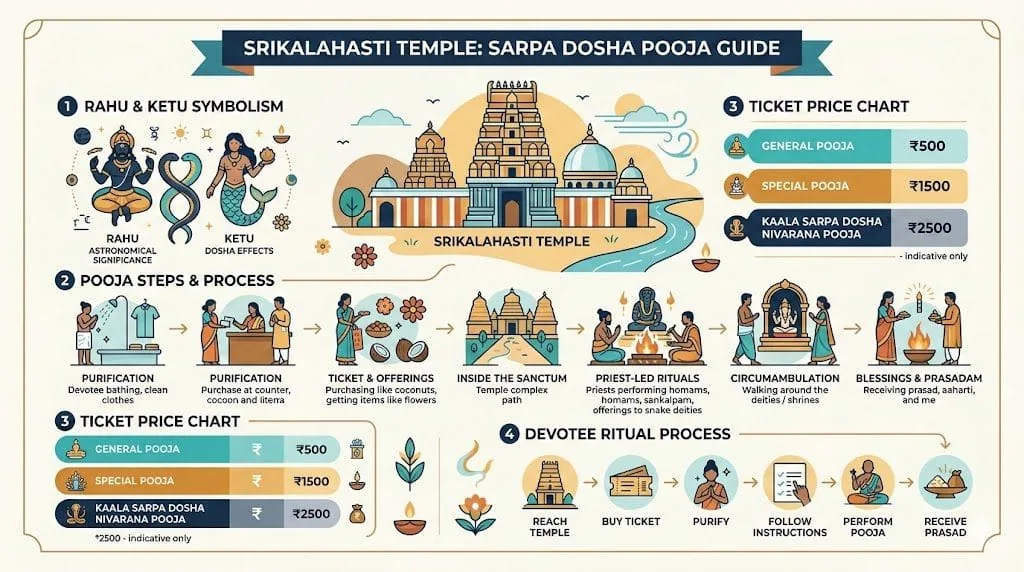
At Sri Kalahasti, the Kala Sarpa Dosha Pooja is performed as the Rahu-Ketu Sarpa Dosha Nivarana ritual near the Vayu Lingam. A priest guides you through a sankalpam, then worship of silver Rahu and Ketu idols, mantra chanting, and a final aarti. The whole ritual with darshan usually takes about two hours.
Timings and the best days for the pooja
The Rahu-Ketu pooja runs from about 6:00 AM to 5:00 PM every day, while the temple itself stays open longer for darshan. Because devotees believe Rahu Kalam carries the strongest effect, Tuesdays and Sundays during that window draw the biggest crowds. There is sometimes a midday pause around 1 PM to 3 PM, so a morning slot works best.
Unlike most temples, Sri Kalahasti stays open during solar and lunar eclipses. Devotees regard eclipse-time pooja here as especially powerful, since this rare tradition ties back to the temple’s Vayu Lingam legend.
The ritual, step by step
You begin with a sankalpam, where the priest records your name, gotra, and intention. Next comes the worship of small silver Rahu and Ketu idols on a turmeric-rice base. The priest then leads the chanting of the Rahu and Ketu beejaksharas, the seed mantras. Finally, a deeparadhana closes the pooja, and you receive tirtham and vibhuti.
After the ritual, you keep the silver idols and place them in your home shrine. Then you walk to the main sanctum for darshan of Sri Kalahasteeswara and Goddess Gnana Prasunambika Devi. Many priests advise against visiting other temples on the same day.
Why Sri Kalahasti Is Linked to This Remedy
Sri Kalahasti is one of the five Pancha Bhoota Sthalams, the temples that represent the elements of nature. This temple represents Vayu, the air element, through its self-manifested Vayu Lingam. Because Rahu and Ketu connect to the air element in Vedic astrology, devotees treat this site as the natural home for the remedy.
The temple sits on the banks of the Swarnamukhi River and carries a famous origin legend. A spider, a serpent, and an elephant once worshipped Lord Shiva here, giving the name Sri-Kala-Hasti. The Andhra Pradesh Endowments Department, which administers the temple, lists it specifically for Rahu-Ketu Sarpa Dosha Nivarana. You can check official details through the AP Endowments Department portal.
Booking the Kala Sarpa Dosha Pooja: Why There Are No Official Online Slots
There is no verified official online booking for the Kala Sarpa Dosha Pooja at Sri Kalahasti. The temple issues tickets only at its counter, on the same day, for that day’s pooja. The Andhra Pradesh Tourism portal and long-time pilgrims both confirm this. So any website selling a “guaranteed advance slot” deserves real caution.
This gap is exactly what scammers exploit. Some sites mimic an official portal, take ₹800 to ₹3,000, and send a polished PDF that the temple priest will not honour. Because the counter system keeps no advance list, that PDF is worthless at the gate.
To stay safe, buy your ticket at the temple’s Rahu-Ketu counter after you arrive. Carry a valid photo ID, since priests sometimes ask for it. If anyone requests payment before your visit, confirm directly with the temple before parting with money.
How Much Does the Kala Sarpa Dosha Pooja Cost?
The Kala Sarpa Dosha Pooja at Sri Kalahasti stays affordable, with reported ticket categories ranging from about ₹500 to ₹5,000. Lower tickets run in shared batches, while the top category buys a quieter, near-sanctum experience. Because the temple administration revises rates from time to time, confirm the current price at the counter.
| Ticket type (indicative) | Approx. cost | What it usually means |
|---|---|---|
| Basic batch | ₹250–₹750 | Group pooja in a shared mandapam |
| Mid category | ₹1,500 | Smaller batch, better seating |
| Couple ticket | ₹2,500 | Spouses seated together |
| Premium | ₹5,000 | Individual pooja, quiet area near sanctum |
These figures are indicative, drawn from pilgrim reports rather than an official tariff. Always verify the current rates, and see the temple’s full seva list for related rituals.
Sri Kalahasti vs Other Temples for Kala Sarpa Dosha
Sri Kalahasti suits the chart-based Rahu-Ketu remedy and a same-day visit, while Kukke Subramanya fits ancestral, snake-related rites that need two days. Trimbakeshwar serves north and west India devotees who often combine Kaal Sarp with Pitru Dosha rituals. So the “best” temple depends on your specific need, your time, and your location.
| Temple | Main ritual | Time needed | Booking |
|---|---|---|---|
| Sri Kalahasti (AP) | Rahu-Ketu Sarpa Dosha Nivarana | About 2 hours | Counter, same day |
| Kukke Subramanya (Karnataka) | Sarpa Samskara, Ashlesha Bali | 2 days | At temple, arrive a day early |
| Trimbakeshwar (Maharashtra) | Kaal Sarp Dosh Nivaran | Half to full day | Through registered local priests |
| Tirunageswaram (Tamil Nadu) | Rahu milk abhishekam | 1 to 2 hours | Counter |
For a single-day visit, Sri Kalahasti remains the most popular choice for the Kala Sarpa Dosha Pooja because of its Rahu-Ketu tradition and eclipse access.
Which temple suits which devotee?
Choose Sri Kalahasti if you want a single-day chart remedy near Tirupati, especially around an eclipse. Pick Kukke Subramanya when an astrologer points to ancestral or snake-related Sarpa Dosha that calls for Sarpa Samskara. Prefer Trimbakeshwar if you live in the north or west, or you also need Narayan Nagbali and Tripindi rites. Each path rests on the same belief, so sincere devotion matters more than the address.
What the Kukke and Trimbakeshwar rituals involve
Kukke Subramanya runs the Sarpa Samskara as a detailed two-day procedure, and the temple provides food and stay for the family performing it. Because the rite resembles ancestral ceremonies, devotees usually arrive a day early to register. Trimbakeshwar, by contrast, conducts Kaal Sarp Dosh Nivaran through registered local priests near the Jyotirlinga. So a Trimbakeshwar visit needs more coordination than a quick Sri Kalahasti counter ticket.
Planning a Combined Tirupati and Sri Kalahasti Trip
Sri Kalahasti sits about 36 km from Tirupati, roughly a 45-minute to one-hour drive. Many pilgrims pair Tirumala darshan with the Kala Sarpa Dosha Pooja on the same trip. A common plan is Tirumala in the morning, then Sri Kalahasti for the pooja by afternoon.
Tirupati Airport lies around 36 km away, while Srikalahasti railway station is just 2 km from the temple. Because air travellers often land late, many rest in Tirupati overnight and reach the temple by 5:30 AM for an early slot. This combined route saves a separate journey and suits families on a tight schedule.
What to Bring and Expect on the Day
Before you set out for the Kala Sarpa Dosha Pooja, a little preparation keeps your visit smooth on busy mornings. Use this quick checklist before you leave for the temple.
- Photo ID: carry Aadhaar or another valid ID, because the counter may ask for it.
- Traditional dress: men wear a dhoti, while women wear a saree or salwar kameez.
- Offerings: bring one litre of milk and a coconut for the ritual.
- Cash and card: the counter usually accepts both, so keep a backup ready.
- Early arrival: reach before 8 AM on weekends, since slots fill quickly.
Plan for roughly two hours from arrival to darshan on a weekday. On Mondays and festival days, allow three to four hours because of heavier crowds. If you travel from afar, book accommodation near the temple the night before.
What First-Timers Get Wrong
The most common mistake is paying online for a “confirmed” slot. As covered above, that advance slot does not exist at Sri Kalahasti. A second mistake is arriving at noon, when the counter may pause and crowds peak.
Many people also forget the one-litre milk packet and coconut that devotees offer during the ritual. Avoid black clothing, since tradition discourages it for this pooja. Couples should sit together, because priests recommend performing it side by side.
Finally, do not discard the silver idols or hand them to others. You take them home and keep them facing south in your pooja room. Many priests suggest repeating the pooja once every six months for a few years.
Before You Decide
The Kala Sarpa Dosha Pooja is a respected tradition, yet it remains a faith practice rather than a guaranteed remedy. Sri Kalahasti gives you a quick, counter-based ritual near Tirupati, with the rare option of an eclipse-day pooja. Kukke Subramanya and Trimbakeshwar suit deeper, multi-day needs that an astrologer may recommend.
For major decisions about health, money, or marriage, treat the pooja as spiritual support alongside qualified professional advice. Above all, book only at the temple counter, and never pay a stranger for a slot that does not exist.
Frequently Asked Questions
Can I book the Kala Sarpa Dosha Pooja online at Sri Kalahasti?
No. Sri Kalahasti has no verified official online booking for this pooja. You buy the ticket at the temple counter on the day of your visit. So avoid sites that sell “guaranteed” advance slots.
What are the Sri Kalahasti Rahu-Ketu pooja timings?
The pooja runs from about 6:00 AM to 5:00 PM daily, and you simply join the next available batch. There may be a midday pause around 1 PM to 3 PM. Confirm timings on arrival, especially on festival days.
Is Sri Kalahasti or Kukke Subramanya better for Kala Sarpa Dosha?
It depends on the rite your astrologer recommends. Sri Kalahasti suits the same-day Rahu-Ketu chart remedy, while Kukke Subramanya fits the two-day Sarpa Samskara for ancestral or snake-related dosha. Both rest on the same underlying belief.
How much does the pooja cost?
Reported ticket categories range from about ₹500 to ₹5,000. Because the temple revises rates periodically, check the current price at the counter. Higher tickets mainly buy quieter seating, not a different blessing.
Can women and couples perform the pooja?
Yes. Women can perform it, except during menstruation days, by tradition. Priests actually encourage couples to sit and perform the ritual together for marriage-related concerns.
Can the pooja be done during an eclipse?
Yes, and devotees consider it especially powerful then. Sri Kalahasti stays open during solar and lunar eclipses, when many other temples close. This eclipse tradition is unique to the temple.
What should I do after the pooja?
Take darshan of Lord Sri Kalahasteeswara and Goddess Gnana Prasunambika Devi. Carry the silver idols home and place them in your pooja room. Many priests advise against visiting other temples that same day.
How often should the pooja be repeated?
Tradition suggests repeating it once every six months for two to three years. Some devotees also choose their birth-star day. Treat this as belief-based guidance rather than a fixed rule.

Independent pilgrim guide for Sri Kalahasti Temple. Curating darshan timings, Rahu Ketu Pooja booking, sevas, accommodation, Vayu Lingam significance, and complete travel guidance for devotees visiting the temple.
