
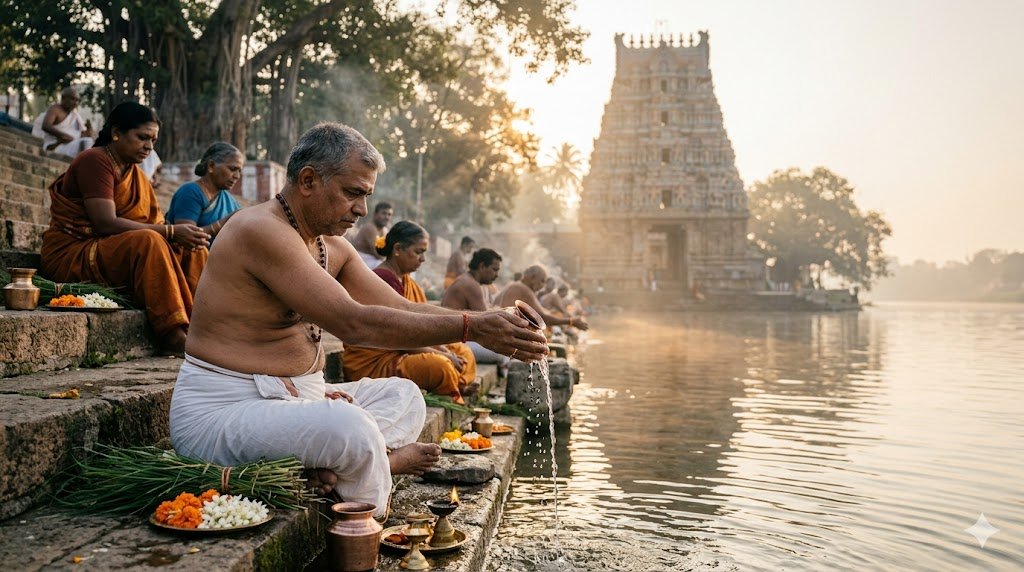
Planning Srikalahasti tharpanam pooja? Find exact timings, ticket prices, booking process, dress code, best days, and the full pitru dosha ritual guide.
Srikalahasti tharpanam pooja is the sacred ancestor ritual performed on the banks of the Swarnamukhi River to appease departed souls and lift pitru dosha from a family’s horoscope. Thousands of devotees travel here every month because this Shiva kshetram, located just 36 km from Tirupati, is believed to hold unusual spiritual potency for ancestor worship. However, most first-time visitors arrive without clarity on timings, ticket costs, the correct procedure, or what to actually carry.
This guide fixes that. Moreover, it covers every practical detail — from the exact ticket slabs to insider tips most websites skip.
Quick Summary: Srikalahasti Tharpanam Pooja at a Glance
- Temple Timings: 5:00 AM to 9:00 PM daily
- Tharpanam Slot: Best performed early morning, 6:00 AM to 10:00 AM
- Ticket Cost: ₹500 to ₹5,000 based on category
- Booking: Offline only, at temple counters on the day of pooja
- Duration: 30 to 45 minutes
- Best Days: Amavasya, Mahalaya Paksha, Sundays, solar/lunar eclipses
- Location: Srikalahasti, Tirupati district, Andhra Pradesh
What Is Srikalahasti Tharpanam Pooja?
Tharpanam is a Vedic water-offering ritual. Specifically, devotees pour water mixed with black sesame seeds (til), darbha grass, and rice while chanting mantras to satisfy the souls of departed ancestors — called pitrus. The Srikalahasti tharpanam pooja combines this ancestral offering with the spiritual power of Lord Kalahasteeswara, who is worshipped here as the Vayu Lingam of the Pancha Bhoota Sthalams.
Furthermore, Srikalahasti holds a unique distinction. It is the only major Shiva temple in India that stays open during solar and lunar eclipses. Since eclipses are considered the most potent moments for pitru karma, this single fact draws pilgrims from across South India.
Why Srikalahasti for Tharpanam?
The Swarnamukhi River flowing beside the temple is classified as a sacred pitru teertham. In addition, the town itself sits in the same spiritual meridian line as Rameshwaram, Chidambaram, Tiruvannamalai, and Kanchipuram. Therefore, the Agasthiar Siddha tradition lists this belt as one of the most powerful corridors for ancestor salvation rituals in the country.
Unlike Rameshwaram, which is famous for Thila Homam, Srikalahasti combines tharpanam with Rahu-Ketu sarpa dosha remedies in the same visit. Consequently, many families choose this temple to settle multiple karmic debts in one trip.
Srikalahasti Tharpanam Pooja Timings
The temple follows a strict schedule. However, tharpanam itself is time-sensitive — it should ideally finish before noon.
| Activity | Timing |
|---|---|
| Temple Opens | 5:00 AM |
| Suprabhatam | 5:00 AM – 5:30 AM |
| Tharpanam Ticket Counter | 5:30 AM – 5:30 PM |
| Ideal Tharpanam Window | 6:00 AM – 10:00 AM |
| Midday Pause | Short; no fixed time published |
| Evening Sevas | 5:00 PM – 8:30 PM |
| Temple Closes | 9:00 PM |
Best Time of Day for the Ritual
Traditionally, tharpanam must be performed during the Aparahna Kala — roughly late morning. Moreover, Vedic texts insist the ritual should end before the sun crosses the meridian. For instance, if you reach the counter at 6:00 AM, you can comfortably complete the pooja by 8:00 AM.
Notably, avoid evening tharpanam unless guided by a priest. Evening slots exist for Rahu-Ketu pooja, not for ancestor offerings.
Srikalahasti Tharpanam Pooja Cost & Ticket Categories
Prices vary based on seating, facilities, and the seva level. Additionally, the temple provides all ritual materials inside the ticket — so there is no need to buy anything from outside shops.
| Ticket | Venue | Accompaniment |
|---|---|---|
| ₹500 | Outer hall, general mandapam | 1 adult only |
| ₹750 | A/C hall near main temple | 1 adult with partner |
| ₹1,500 | Inner mandapam, closer to sanctum | 2 adults + 2 children |
| ₹2,500 | Premium inner hall, priest-led batch | 2 adults + 2 children |
| ₹5,000 | Special guest slot, individual priest | Family included |
Above all, the ₹1,500 category offers the best balance. Furthermore, it gets you inside the inner mandapam with direct priest guidance. Meanwhile, the ₹500 ticket can feel rushed during peak days.
What the Ticket Includes
Every Srikalahasti tharpanam pooja ticket comes bundled with pooja samagri. Specifically, the kit contains:
- Black sesame seeds (til) and raw rice
- Darbha grass (kusha)
- Sacred thread (pavithram)
- Flowers and sandalwood paste
- Copper or brass tharpanam vessel for the ritual
- A small dakshina bowl
Consequently, you do not need to bring anything except a change of clothes and your ancestors’ gotra and naksatra details.
How to Book Srikalahasti Tharpanam Pooja
Online booking is not available for tharpanam at Srikalahasti. Instead, all tickets are sold at the temple ticket counters on the same day. However, this offline-only rule keeps middlemen active outside the temple, so be alert.
Step-by-Step Booking Process
- Reach early. Arrive at the temple by 5:30 AM to avoid queue delays.
- Enter through Gate No. 4. This is the south gopuram entrance, closest to the seva counters.
- Use the changing rooms. The temple charges ₹50 for dress-change facilities.
- Buy your ticket. Select your category from the tharpanam counter.
- Collect the pooja kit. All materials are handed over at the counter itself.
- Proceed to the assigned hall. Staff will direct you based on ticket category.
- Share your gotra details. The priest needs your family lineage name.
- Perform the ritual. Follow the priest’s chants and water offerings.
- Darshan after pooja. Your ticket grants direct sanctum entry.
Avoiding Touts and Scams
Outside the temple, auto drivers often promise “quick booking” or private priest services. However, the temple administration does not authorise any third-party bookings. Therefore, ignore anyone who approaches you at the railway station or bus stand.
In fact, free shuttle buses run from Srikalahasti railway station to the temple from 4:00 AM onwards. So there is no need to hire a private auto unless your luggage demands it.
Best Days for Srikalahasti Tharpanam Pooja
While tharpanam can be performed on most days, certain dates carry significantly higher spiritual weight. Moreover, the temple gets extremely crowded on these days — so plan accordingly.
Highest-Priority Days
- Mahalaya Amavasya: The single most important pitru day of the year — Saturday, 10 October 2026
- Mahalaya Paksha (Pitru Paksha): 15-day fortnight before Navaratri — 26 September to 10 October in 2026
- Amavasya (every month): Especially Thai Amavasya and Aadi Amavasya
- Solar Eclipse (Surya Grahan): Temple stays open — extremely powerful
- Lunar Eclipse (Chandra Grahan): Same as above
- Your ancestor’s death tithi: The annual shraddha date
Secondary Auspicious Days
- Sundays — favoured for combined tharpanam and Rahu-Ketu pooja
- Ashlesha Nakshatra days — linked to naga and pitru energies
- Sankranti transitions — especially Dakshinayana Punyakalam
Consequently, if you can plan your visit around Mahalaya Paksha in September-October, the karmic benefit multiplies. That said, expect heavy crowds and longer wait times during these windows.
Dress Code and Preparation Rules
Srikalahasti enforces traditional attire for tharpanam. Although the temple is lenient about darshan clothing, the pooja halls are strict.
What Men Should Wear
- White dhoti with upper cloth (angavastram)
- Bare chest preferred during the actual ritual
- Avoid shirts, t-shirts, and stitched clothing inside the mandapam
What Women Should Wear
- Cotton saree with blouse (preferred)
- Salwar kameez with dupatta (acceptable)
- Avoid black, fashionable prints, and synthetic fabrics
Pre-Pooja Preparation
Tharpanam demands physical and mental cleanliness. Similarly, certain food restrictions apply the day before and during the ritual.
- Avoid non-vegetarian food for 3 days before the pooja
- Skip onion, garlic, and alcohol on pooja day
- Take a bath before reaching the temple
- Fast until the ritual is complete (water is allowed)
- Carry your gotra, pravara, and ancestor name list
The Tharpanam Ritual: What Actually Happens Inside
Many devotees feel nervous because the procedure involves Sanskrit chants they don’t follow. However, the priest handles all the mantras — your job is simpler than most expect.
The Core Sequence
- Sankalpa: The priest opens with your name, gotra, and intent
- Aachamanam: Purification through sipping water three times
- Pavitra dharana: Wearing the sacred grass ring on the ring finger
- Pitru avahana: Invoking three generations of ancestors — father, grandfather, great-grandfather
- Water offering: Pouring water with sesame seeds through the fingers, facing south
- Mantra chanting: The priest recites Vedic verses while you offer
- Maternal lineage: The process repeats for the mother’s side
- Final offering: Darbha grass and sesame are dropped into the ritual plate
- Udvasana: Formal farewell to the ancestors
The Direction Rule
During tharpanam, you must face south. In fact, the south is considered the direction of Yama and the pitru loka. Similarly, the sacred thread shifts to the right shoulder (apasavya) — opposite the normal direction worn during worship of living deities.
Srikalahasti Tharpanam Pooja vs Other Pitru Remedy Temples
Many families ask whether Srikalahasti, Rameshwaram, or Gaya is the right choice. Honestly, each serves a different purpose.
| Temple | Primary Ritual | Best For |
|---|---|---|
| Srikalahasti | Tharpanam + Rahu-Ketu pooja | Combined pitru and sarpa dosha |
| Rameshwaram | Thila Homam | Unnatural ancestral deaths |
| Gaya (Bihar) | Pinda Daan | Permanent pitru moksha |
| Thilatharpanapuri | Once-in-lifetime Thila Homam | Severe pitru shapam |
| Kashi (Varanasi) | Pind Daan at Manikarnika | Final liberation rites |
Consequently, Srikalahasti works best as a yearly or periodic tharpanam stop. Whereas Gaya is typically done once in a lifetime for permanent ancestor liberation.
How to Reach Srikalahasti Temple
Srikalahasti sits roughly 36 km northeast of Tirupati and enjoys excellent rail and road connectivity. Furthermore, most pilgrims combine this visit with Tirumala darshan.
By Air
Tirupati International Airport (TIR) is the nearest, about 25 km away. Hence, flights connect from Hyderabad, Bengaluru, Chennai, Delhi, and Mumbai. Taxi fare from the airport averages ₹700 to ₹900.
By Train
Srikalahasti Railway Station (code: KHT) lies just 3 km from the temple. In addition, direct trains run from Chennai, Vijayawada, Hyderabad, and Tirupati. The Sapthagiri Express and Venkatadri Express are popular choices.
By Road
APSRTC buses connect Srikalahasti with Tirupati every 15 minutes. Moreover, long-distance buses operate from Chennai (130 km), Bengaluru (280 km), and Vijayawada (380 km). The drive from Tirupati takes under one hour.
Where to Stay Near Srikalahasti Temple
Most pilgrims finish tharpanam by 10:00 AM and travel back to Tirupati the same day. However, if you prefer to stay overnight, budget options are easy to find.
- Budget (₹600–₹1,200): Sri Kalahasti Devasthanam choultries and smaller lodges near the railway station
- Mid-Range (₹1,500–₹3,000): Hotel Bhimas, Hotel Mayura, and similar options near the temple
- Tirupati Stay (₹2,000–₹5,000): APTDC Srinivasam Complex and private hotels in Tirupati for combined pilgrimage
Above all, book in advance during Mahalaya Paksha and festival weekends. Prices may vary seasonally.
Insider Tips Most Websites Skip
After speaking with regular pilgrims and local priests, a few practical details stand out.
What to Carry
- A printed list of your ancestors with their gotra — helps the priest work faster
- Aadhaar card for identity verification at premium counters
- A small towel since you may need to bathe near the Swarnamukhi
- Cash for dakshina — ₹51, ₹101, or ₹116 denominations are traditional
What to Avoid
- Do not visit other temples immediately after tharpanam — go home or rest
- Do not carry leftover pooja samagri back to your house
- Avoid photography inside the mandapam during the ritual
- Do not consume food at the pooja site before offering to ancestors
A Trend Worth Noting
Many NRIs now schedule a Srikalahasti tharpanam pooja as part of their India visits. As a result, English-speaking priests are increasingly available at the ₹1,500 and ₹2,500 counters — a shift older guides don’t reflect.
Common Mistakes First-Time Devotees Make
Even sincere devotees trip over small procedural errors. Fortunately, these are easy to fix once you know them.
- Wearing stitched clothes: Many get turned away at the mandapam entrance
- Forgetting the gotra: Without this, the sankalpa cannot be done properly
- Skipping the fast: Eating before tharpanam reduces the ritual’s potency
- Using wet clothes: You must change into dry clothes before the pooja starts
- Combining with Tirumala first: Many sources say visit Tirumala before Srikalahasti, not after
The Bottom Line on Srikalahasti Tharpanam Pooja
Srikalahasti tharpanam pooja delivers genuine spiritual and emotional closure for families carrying pitru dosha or seeking to honour departed ancestors. The combination of Vayu Lingam darshan, the sacred Swarnamukhi River, and temple-provided ritual materials makes the process far smoother than most pilgrimage rituals elsewhere. Plan for an early morning visit, carry your gotra details, choose the ₹1,500 category for a balanced experience, and schedule around Mahalaya Paksha if spiritual intensity is your priority. Above all, approach the ritual with sincerity — the mechanics matter less than the intent.
Frequently Asked Questions
What is the cost of Srikalahasti tharpanam pooja?
Ticket prices range from ₹500 to ₹5,000 depending on the seating category and facilities. The ₹500 ticket covers a general outer hall, while ₹1,500 gets you into the inner mandapam with priest guidance. All tickets include the pooja samagri, so there is no additional material cost.
Can I book Srikalahasti tharpanam pooja online?
No. Tharpanam tickets are sold only at the temple ticket counters on the same day of the pooja. The temple does not offer online booking for this ritual, and any third-party website claiming to book it is unofficial. Reach the temple by 5:30 AM to secure your preferred slot.
Which day is best for tharpanam at Srikalahasti?
Mahalaya Amavasya (Saturday, 10 October 2026) is considered the most powerful day of the year, followed by the entire Mahalaya Paksha fortnight (26 September to 10 October in 2026), monthly Amavasya, and solar or lunar eclipse days. Sundays are also favoured when combined with Rahu-Ketu pooja.
How long does the Srikalahasti tharpanam pooja take?
The ritual itself lasts 30 to 45 minutes from sankalpa to udvasana. However, you should plan for at least 2 to 3 hours in total — this covers ticket purchase, dress change, waiting for the batch to start, and darshan after the pooja.
Do I need to know Sanskrit or mantras for the pooja?
No. The priest chants all mantras in Sanskrit and gives you instructions in Telugu, Tamil, English, or Hindi depending on your ticket category. Your role is to follow the priest’s directions for water offerings, hand gestures, and dropping sesame seeds.
Can I perform tharpanam if my parents are still alive?
Yes. Tharpanam is offered to any departed ancestors — grandparents, great-grandparents, or other family members. However, some families traditionally wait until both parents pass before performing annual tharpanam. Consult a priest if you are unsure.
What should I do immediately after the pooja?
Have darshan of Lord Kalahasteeswara and Goddess Gnana Prasunambika Devi using your pooja ticket. After that, return directly home or to your lodging — traditional guidance says you should avoid visiting other temples immediately after tharpanam. Rest for the remainder of the day.

Independent pilgrim guide for Sri Kalahasti Temple. Curating darshan timings, Rahu Ketu Pooja booking, sevas, accommodation, Vayu Lingam significance, and complete travel guidance for devotees visiting the temple.
